<?xml version="1.0" encoding="utf-8"?><feed xmlns="http://www.w3.org/2005/Atom" ><generator uri="https://jekyllrb.com/" version="3.10.0">Jekyll</generator><link href="https://manikyaswathi.github.io/feed.xml" rel="self" type="application/atom+xml" /><link href="https://manikyaswathi.github.io/" rel="alternate" type="text/html" /><updated>2026-06-10T08:29:37-07:00</updated><id>https://manikyaswathi.github.io/feed.xml</id><title type="html">Manikya Swathi Vallabhajosyula</title><subtitle>A 5th year Ph.D. student at The Ohio State University</subtitle><author><name>Manikya Swathi Vallabhajosyula</name><email>vallabhajosyula.2@buckeyemail.osu.edu</email></author><entry><title type="html">ICICLE at SC’25 “HPC Ignites”: Advancing Intelligent Cyberinfrastructure for Real-World Science</title><link href="https://manikyaswathi.github.io/posts/2025/11/icicle-sc25/" rel="alternate" type="text/html" title="ICICLE at SC’25 “HPC Ignites”: Advancing Intelligent Cyberinfrastructure for Real-World Science" /><published>2025-11-20T00:00:00-08:00</published><updated>2025-11-20T00:00:00-08:00</updated><id>https://manikyaswathi.github.io/posts/2025/11/icicle-sc25</id><content type="html" xml:base="https://manikyaswathi.github.io/posts/2025/11/icicle-sc25/"><![CDATA[<p>November 2025 — The ICICLE team traveled to St. Louis, Missouri for <strong>SC’25</strong>, the International Conference for High Performance Computing, Networking, Storage, and Analysis. This year’s theme, <em>“HPC Ignites,”</em> highlighted how advanced computing is sparking new solutions for urgent global challenges — from climate resilience to food systems, digital health, and sustainable infrastructure.</p>

<hr />

<h2 id="sharing-research-and-technical-advances">Sharing Research and Technical Advances</h2>

<p>ICICLE researchers were active throughout SC’25, contributing work that bridges the gap between field-deployed computing and large-scale HPC systems. The focus: how AI-augmented cyberinfrastructure can automate complex scientific workflows, improving scheduling, model updating, and deployment across computing environments — reducing trial-and-error in model development and helping computational resources be used more efficiently.</p>

<p>I represented ICICLE in the <strong>SC’25 Doctoral Showcase</strong>, presenting both a poster and a technical talk on <em>AI-Driven Resource Optimization for HPC Workflows</em>. I also delivered an <strong>Extended Abstract Lightning Talk</strong> as part of the <strong>Women in HPC</strong> workshop, highlighting ICICLE’s commitment to fostering an inclusive and innovative computing community.</p>

<p>At The Ohio State University exhibit, <strong>Dr. Dhabaleswar K. (DK) Panda</strong> provided an overview of the ICICLE project and recent work from NOWLAB, demonstrating how integrating AI with HPC leads to more agile, energy-efficient, and scalable systems for modern scientific computing.</p>

<h2 id="digital-agriculture-and-domain-impact">Digital Agriculture and Domain Impact</h2>

<p>ICICLE’s mission extends beyond HPC research — it applies computation to societally critical fields. This was reflected in the <strong>“Agriculture Empowered by Supercomputing”</strong> Birds-of-a-Feather (BoF) session, where Dr. Panda joined distinguished speakers to discuss how computing power is transforming food systems.</p>

<p>The discussion highlighted the need for climate-smart farming, real-time crop and soil modeling, data-driven food supply chains, and scalable AI for food resilience. This domain-centric perspective aligns with a core ICICLE aim: <strong>democratizing intelligent computing for communities, ecosystems, and sustainable agriculture.</strong></p>

<h2 id="hands-on-engagement-through-scinet">Hands-On Engagement Through SCinet</h2>

<p>ICICLE’s presence extended beyond the technical program through participation in <strong>SCinet</strong> — the high-performance network that supports the entire conference and is one of the fastest temporary networks in the world. ICICLE NextGens volunteered in deploying and operating SCinet, gaining hands-on experience in large-scale infrastructure design and monitoring. This directly supports ICICLE’s mission to build cyberinfrastructure that is practical, scalable, and ready for real-world use.</p>

<h2 id="looking-ahead-ideas-ignited">Looking Ahead: Ideas Ignited</h2>

<p>Conversations in St. Louis reinforced a shared vision: HPC and AI must work together to create infrastructure that learns from scientific workflows, adapts automatically, and scales from small field devices to national supercomputers. ICICLE continues to make this possible by integrating intelligent scheduling, science gateways, edge computing, and reproducibility into a unified, human-centered framework for scientific computing.</p>

<p>It was inspiring to engage with collaborators, students, industry partners, and researchers across the HPC community. We look forward to seeing how the ideas ignited at SC’25 continue to evolve.</p>]]></content><author><name>Manikya Swathi Vallabhajosyula</name><email>vallabhajosyula.2@buckeyemail.osu.edu</email></author><category term="SC25" /><category term="Supercomputing" /><category term="ICICLE" /><category term="HPC" /><category term="Doctoral Showcase" /><category term="digital agriculture" /><summary type="html"><![CDATA[November 2025 — The ICICLE team traveled to St. Louis, Missouri for SC’25, the International Conference for High Performance Computing, Networking, Storage, and Analysis. This year’s theme, “HPC Ignites,” highlighted how advanced computing is sparking new solutions for urgent global challenges — from climate resilience to food systems, digital health, and sustainable infrastructure.]]></summary></entry><entry><title type="html">ISC HPC 2025 — ICICLE at the Intersection of AI, Supercomputing, and Societal Impact</title><link href="https://manikyaswathi.github.io/posts/2025/06/isc-hpc-2025/" rel="alternate" type="text/html" title="ISC HPC 2025 — ICICLE at the Intersection of AI, Supercomputing, and Societal Impact" /><published>2025-06-13T00:00:00-07:00</published><updated>2025-06-13T00:00:00-07:00</updated><id>https://manikyaswathi.github.io/posts/2025/06/isc-hpc-2025</id><content type="html" xml:base="https://manikyaswathi.github.io/posts/2025/06/isc-hpc-2025/"><![CDATA[<p>The International Supercomputing Conference (ISC HPC) 2025, held June 10–13 at the Congress Center Hamburg, marked the <strong>40th anniversary</strong> of one of the world’s premier events in high-performance computing, AI, data analytics, and quantum computing. With over 3,500 attendees and a theme of “Connecting the Dots,” the conference brought together global researchers, engineers, and policymakers united around the future of intelligent, sustainable computing.</p>

<hr />

<h2 id="icicle--isc-posters-talks-and-smart-infrastructure">ICICLE @ ISC: Posters, Talks, and Smart Infrastructure</h2>

<p>Set against the backdrop of Hamburg — Germany’s maritime gateway, home to the iconic Elbphilharmonie concert hall and the UNESCO-listed Speicherstadt warehouse district — the conference offered not just technical depth but cultural inspiration.</p>

<p>I had the pleasure of presenting ICICLE research across three tracks — <strong>Women in HPC</strong>, <strong>Research Posters</strong>, and <strong>Project Showcases</strong> — in collaboration with Dr. Karen Tomko:</p>

<ul>
  <li><strong>WHPC Poster:</strong> <em>Motivated by Challenges: Harnessing AI to Revolutionize Resource Management and Workflow Management in High-Performance Computing</em></li>
  <li><strong>Research Poster:</strong> <em>Intelligence Plane: A Framework for Machine Learning Application Life-cycle Management</em></li>
  <li><strong>Project Poster:</strong> <em>Hybrid Black-Box and White-Box Approaches for Efficient Resource Prediction for AI Workloads in High-Performance Computing</em></li>
</ul>

<p>Each poster was accompanied by a lightning talk sharing ICICLE’s contributions to AI-driven resource scheduling and runtime optimization across edge-to-HPC environments.</p>

<h2 id="spotlight-responsible-ai-and-agriculture">Spotlight: Responsible AI and Agriculture</h2>

<p>Having attended the ICICLE Seminar featuring <strong>Dr. Manish Parashar</strong>, I was deeply inspired by his talk on <em>“Harnessing Responsible AI for Science Discovery, Innovation, and Impact.”</em> His emphasis on democratizing AI and building inclusive, transdisciplinary cyberinfrastructure resonated with ICICLE’s mission — and it was exciting to hear his perspective again at ISC HPC 2025 during the BoF session <em>“Agriculture Empowered by Supercomputing.”</em></p>

<p>The discussion focused on how HPC, AI, and distributed systems can enhance resilience through yield prediction, supply chain optimization, and precision breeding — while bridging the gap between edge devices and national supercomputing infrastructure.</p>

<h2 id="a-panel-that-hit-close-to-home">A Panel That Hit Close to Home</h2>

<p>One session that stood out was <em>“Is HPC Energy Efficiency All About Hardware?”</em> — a theme that directly complements our ICICLE research. The panel posed critical questions: Is energy optimization solely a hardware challenge, or must we adopt software-driven strategies for smarter, more sustainable computing?</p>

<p>These are precisely the questions we confront developing <strong>AI-driven edge model planners</strong> and <strong>energy-aware schedulers</strong>. It was validating to see global researchers — hardware architects, software developers, and AI engineers — united around the same goal.</p>

<h2 id="workshops--tutorials-personal-favorites">Workshops &amp; Tutorials: Personal Favorites</h2>

<p>The final day of ISC is always my favorite — dedicated to hands-on workshops with smaller, focused groups. Highlights:</p>

<ul>
  <li><strong>“First International Workshop on Foundational Large Language Model Advances for HPC”</strong> — exploring how LLMs can support code generation, compiler optimization, and parallel performance tuning.</li>
  <li><strong>“Leveraging and Evaluating LLMs for HPC Research”</strong> — practical insights into tailoring LLMs for scientific workflows, bridging usability, performance, and scalability.</li>
  <li><strong>“Flux: Next-Generation Workload Management for HPC and Cloud”</strong> — Flux’s graph-based architecture and database-driven scheduling resonated strongly with our Smart Scheduler work under ICICLE’s Ai4CI effort.</li>
</ul>

<h2 id="final-thoughts">Final Thoughts</h2>

<p>ISC HPC 2025 was more than a conference — it was a dynamic convergence of vision, innovation, and purpose. From agricultural resilience to energy-efficient AI, and from LLMs in science to the evolution of workload scheduling, every session helped bridge disciplines, technologies, and communities. I left Hamburg more confident than ever that collaborative, responsible design — across software, hardware, and societal systems — is what drives impactful innovation.</p>]]></content><author><name>Manikya Swathi Vallabhajosyula</name><email>vallabhajosyula.2@buckeyemail.osu.edu</email></author><category term="ISC HPC" /><category term="ICICLE" /><category term="HPC" /><category term="AI" /><category term="Hamburg" /><category term="LLMs" /><summary type="html"><![CDATA[The International Supercomputing Conference (ISC HPC) 2025, held June 10–13 at the Congress Center Hamburg, marked the 40th anniversary of one of the world’s premier events in high-performance computing, AI, data analytics, and quantum computing. With over 3,500 attendees and a theme of “Connecting the Dots,” the conference brought together global researchers, engineers, and policymakers united around the future of intelligent, sustainable computing.]]></summary></entry><entry><title type="html">ICICLE @ MWRCD 2025: From the Lens of an ICICLE NextGen</title><link href="https://manikyaswathi.github.io/posts/2025/04/icicle-mwrcd-2025/" rel="alternate" type="text/html" title="ICICLE @ MWRCD 2025: From the Lens of an ICICLE NextGen" /><published>2025-04-15T00:00:00-07:00</published><updated>2025-04-15T00:00:00-07:00</updated><id>https://manikyaswathi.github.io/posts/2025/04/icicle-mwrcd-2025</id><content type="html" xml:base="https://manikyaswathi.github.io/posts/2025/04/icicle-mwrcd-2025/"><![CDATA[<p>The Midwest Research Computing and Data (MWRCD) Annual Meeting 2025, held April 14–15 at Case Western Reserve University, brought together a vibrant community of research computing professionals, data scientists, system administrators, faculty, and students from across the Midwest. As an ICICLE NextGen member, it was inspiring to see how this event continues to foster collaboration, spark innovation, and address evolving challenges in cyberinfrastructure, HPC, and AI-driven technologies.</p>

<hr />

<h2 id="icicles-breakout-session-middleware-development-for-ai--advanced-computing">ICICLE’s Breakout Session: Middleware Development for AI &amp; Advanced Computing</h2>

<p>A highlight for the <strong>NSF AI Institute for Intelligent Cyberinfrastructure with Computational Learning in the Environment (ICICLE)</strong> was hosting the breakout session, <em>“ICICLE Middleware Development for AI &amp; Advanced Computing.”</em> This session showcased ICICLE’s commitment to building a seamless, plug-and-play computing continuum that bridges AI applications with HPC, cloud, and edge environments.</p>

<p>The ICICLE team presented key innovations across three areas:</p>

<ul>
  <li><strong>Middleware Tools:</strong> Sachith Withana introduced <em>Patra Model Cards</em> and <em>MLHub</em>, tools enhancing AI/ML model governance and lifecycle management. I presented the <strong>Smart Scheduler</strong> — an AI-powered framework for optimizing resource allocation and integrating MLOps practices.</li>
  <li><strong>AI Models Supporting Middleware:</strong> Biyao Zhang highlighted advanced GPU performance modeling for Large Language Models (LLMs), enabling more efficient deep learning workload management.</li>
  <li><strong>Application-Centric Tools:</strong> Debargha Ganguly showcased the <em>Labeling Copilot</em>, addressing data scarcity through accelerated synthetic data generation and annotation.</li>
</ul>

<p>The session concluded with a dynamic panel discussion, <em>“ICICLE Engages the MWRCD Community,”</em> moderated by Karen Tomko (Ohio Supercomputer Center), joined by Jane Combs (University of Cincinnati), Preston Smith (Purdue University), and Scott Michael (Indiana University). The discussion focused on fostering collaboration, strengthening community engagement, and shaping the future of AI-integrated cyberinfrastructure.</p>

<h2 id="beyond-icicle-key-highlights-from-mwrcd-2025">Beyond ICICLE: Key Highlights from MWRCD 2025</h2>

<p>One of the most captivating sessions was the keynote by <strong>Daniel Blankenberg from Cleveland Clinic</strong>, discussing the world’s first quantum computer dedicated to healthcare research — the IBM Quantum System One. Blankenberg emphasized how the convergence of quantum computing, AI, and machine learning is set to revolutionize biomedical research, from drug discovery to precision medicine.</p>

<p>Another insightful panel explored best practices for deploying <strong>AI chatbots in HPC environments</strong>. Projects like <em>QA Tool for ACCESS</em>, <em>AnvilGPT</em>, and <em>hpcGPT</em> demonstrated how LLM-based chat interfaces can streamline research support. Key lessons: design simple Q&amp;A systems to reduce hallucinations, use human-in-the-loop feedback, and integrate Retrieval-Augmented Generation (RAG) for context-aware responses.</p>

<h2 id="reflections">Reflections</h2>

<p>Participating in MWRCD 2025 as part of ICICLE not only highlighted the institute’s contributions but reinforced the importance of community-driven innovation. From middleware advancements to quantum computing and AI deployment discussions, the event showcased how collaborative efforts are shaping the future of research computing.</p>

<p>If you’re passionate about advancing AI-integrated cyberinfrastructure, now is the time to engage with initiatives like ICICLE and be part of this transformative journey.</p>]]></content><author><name>Manikya Swathi Vallabhajosyula</name><email>vallabhajosyula.2@buckeyemail.osu.edu</email></author><category term="ICICLE" /><category term="MWRCD" /><category term="Smart Scheduler" /><category term="HPC" /><category term="cyberinfrastructure" /><summary type="html"><![CDATA[The Midwest Research Computing and Data (MWRCD) Annual Meeting 2025, held April 14–15 at Case Western Reserve University, brought together a vibrant community of research computing professionals, data scientists, system administrators, faculty, and students from across the Midwest. As an ICICLE NextGen member, it was inspiring to see how this event continues to foster collaboration, spark innovation, and address evolving challenges in cyberinfrastructure, HPC, and AI-driven technologies.]]></summary></entry><entry><title type="html">A Continuous 3rd-Year Presence at AI Exploration Day @ Hudson Middle School</title><link href="https://manikyaswathi.github.io/posts/2024/04/ai-exploration-day-hudson/" rel="alternate" type="text/html" title="A Continuous 3rd-Year Presence at AI Exploration Day @ Hudson Middle School" /><published>2024-04-20T00:00:00-07:00</published><updated>2024-04-20T00:00:00-07:00</updated><id>https://manikyaswathi.github.io/posts/2024/04/ai-exploration-day-hudson</id><content type="html" xml:base="https://manikyaswathi.github.io/posts/2024/04/ai-exploration-day-hudson/"><![CDATA[<p>AI Exploration Day at Hudson Middle School in Hudson, Ohio is an annual event designed to introduce students to the world of artificial intelligence and its real-world applications. For the third consecutive year, the ICICLE team showed up — and this year’s demos made it clearer than ever that the next generation of AI researchers might already be sitting in a middle school classroom.</p>

<hr />

<h2 id="what-did-we-present-as-iciclers">What Did We Present as ICICLErs?</h2>

<p>Our ICICLE team delivered a hands-on, engaging overview of AI for multiple groups of students. We started by asking: where does AI appear in your daily life? Both consciously (like using ChatGPT) and unconsciously (like Google search rankings). We introduced ICICLE’s mission and shared how it collaborates with projects like <strong>Imageomics</strong> to support environmental and animal ecology use cases.</p>

<p>We highlighted <strong>Jenna Kline’s work at The Wilds</strong>, where she uses drones to capture ecological data — arguably the crux of any machine learning process. The data she gathers helps ecologists analyze animal behavior for posture detection, unique animal identification, intrusion detection, and disease tracking.</p>

<p>We closed by discussing the challenges of applying general-purpose AI models to domain-specific problems like animal ecology, where data is limited and field conditions are highly variable.</p>

<h2 id="how-did-we-ignite-their-curiosity">How Did We “Ignite” Their Curiosity?</h2>

<p>After the presentation, students rotated through two interactive demo stations:</p>

<h3 id="1-drone-flight-challenge">1. Drone Flight Challenge</h3>

<p>Students were given three rules: don’t crash it, don’t hurt yourself, and don’t hurt others. To our delight — they succeeded. No crashes, lots of laughter, and genuine curiosity about how drones are used in research.</p>

<h3 id="2-outsmart-the-yolo-model">2. Outsmart the YOLO Model</h3>

<p>Students were challenged to find images that could <em>confuse</em> the YOLO object detection model. Using a Google Form, they uploaded images they believed would trip up the model.</p>

<p>The results were a mix of brilliance and hilarity. Some uploaded cartoon characters like Minions — which the model misidentified as generic “animals,” since YOLO is trained on the COCO dataset (which has no Minion category). Others uploaded hyper-realistic cakes or deceptive perspectives — like a man holding a camera disguised as food.</p>

<p>The insight that emerged organically: <strong>AI is only as good as the data it was trained on.</strong> Their experiments exposed gaps in pre-trained models and sparked real conversation about the importance of domain-specific fine-tuning — especially on resource-constrained devices like drones, smartphones, and camera traps.</p>

<h2 id="other-cool-ai-demonstrations-boston-dynamics-spot">Other Cool AI Demonstrations: Boston Dynamics’ Spot</h2>

<p>Another standout demo was <strong>Spot</strong>, the Boston Dynamics robot dog, presented by the University of Akron. Spot’s advanced mobility, 360° perception, and gesture-based response system left students in awe. Commands like “sit,” “shake hands,” and “Saranghae ♡” made Spot feel like a futuristic pet.</p>

<p>But Spot isn’t just a fun demo — it’s a powerful research platform. With autonomous navigation and payload adaptability, it’s ideal for STEM outreach and real-world applications in human-robot interaction. Seeing its capabilities got us thinking: could robotic dogs like Spot be deployed in animal ecology or precision agriculture, patrolling fields and habitats with AI-powered sensors to detect crop disease, track animal behavior, or collect real-time environmental data?</p>

<p>The answer, increasingly, is yes. And these students just might be the ones to build it.</p>]]></content><author><name>Manikya Swathi Vallabhajosyula</name><email>vallabhajosyula.2@buckeyemail.osu.edu</email></author><category term="outreach" /><category term="AI literacy" /><category term="ICICLE" /><category term="K-12" /><category term="YOLO" /><summary type="html"><![CDATA[AI Exploration Day at Hudson Middle School in Hudson, Ohio is an annual event designed to introduce students to the world of artificial intelligence and its real-world applications. For the third consecutive year, the ICICLE team showed up — and this year’s demos made it clearer than ever that the next generation of AI researchers might already be sitting in a middle school classroom.]]></summary></entry><entry><title type="html">Journey from Research to User-Friendly Portals: HARP and the SGX3 Experience at Science Gateways 2023</title><link href="https://manikyaswathi.github.io/posts/2023/10/science-gateways-2023-harp/" rel="alternate" type="text/html" title="Journey from Research to User-Friendly Portals: HARP and the SGX3 Experience at Science Gateways 2023" /><published>2023-10-20T00:00:00-07:00</published><updated>2023-10-20T00:00:00-07:00</updated><id>https://manikyaswathi.github.io/posts/2023/10/science-gateways-2023-harp</id><content type="html" xml:base="https://manikyaswathi.github.io/posts/2023/10/science-gateways-2023-harp/"><![CDATA[<p>As a Ph.D. student, most of my time is dedicated to literature reviews, data curation, and developing custom AI frameworks for HPC resource allocation. But there is a critical gap between building research code and delivering user-friendly, reproducible software components — and Science Gateways 2023 in Pittsburgh brought that gap into sharp focus.</p>

<hr />

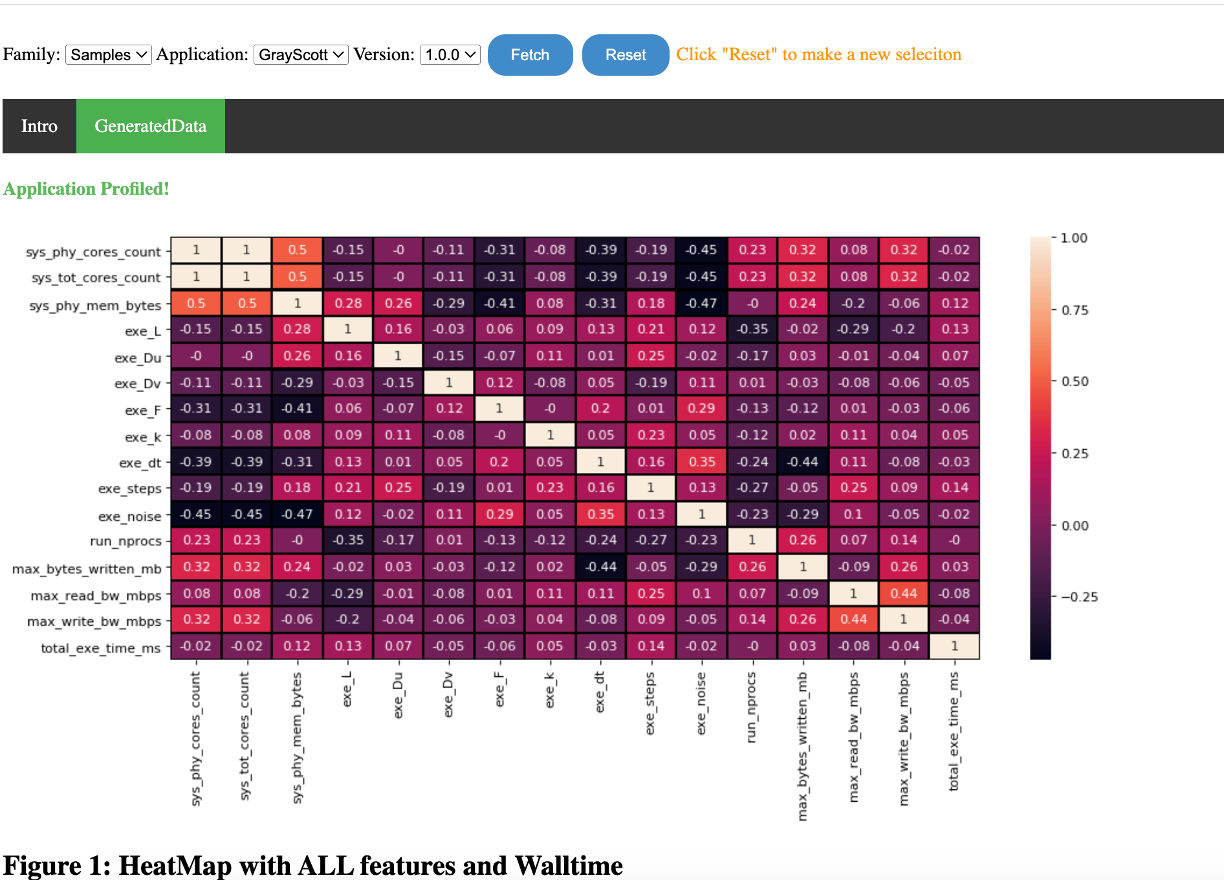
<p>My research centers on the <strong>HARP (HPC Application Resource Predictor)</strong> framework, which uses machine learning to estimate resource requirements for scientific workflows on HPC systems like the Ohio Supercomputer Center (OSC) and the Texas Advanced Computing Center (TACC). Researchers on these systems face real challenges: unique workflow demands, complex resource configurations, and associated allocation costs all make efficient job submission a moving target.</p>

<p>During my SGX3 internship at TACC, I focused on the software engineering side of HARP — applying FAIR principles, addressing generalizability, and containerizing components for cyberinfrastructure-agnostic deployment. This work is part of the NSF AI Institute <strong>ICICLE</strong>, aimed at simplifying and expanding AI usage for analytics, modeling, and automation in scientific workflows (Ai4CI).</p>

<p><img src="/images/Harp_portal1.png" alt="HARP Portal Feature Correlation View" />
<em>The HARP portal showing feature correlations and their influence on walltime prediction.</em></p>

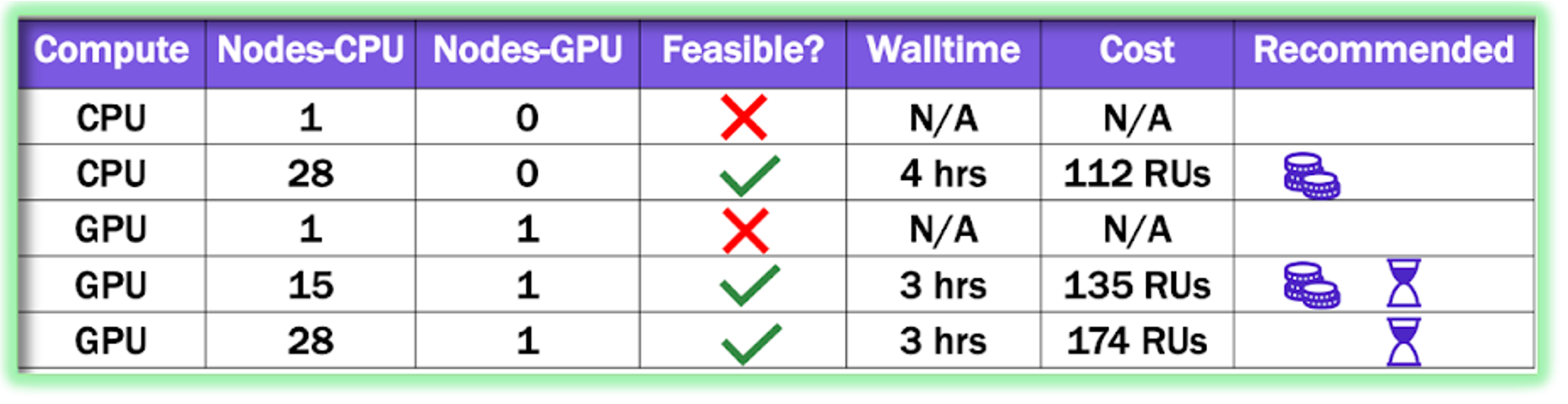
<p><img src="/images/Harp_portal2.png" alt="HARP Cost-Time Output" />
<em>Sample cost-time output from regression models, parsed against CI policies and billing structures.</em></p>

<h2 id="icicle--science-gateways-2023">ICICLE @ Science Gateways 2023</h2>

<p>As an SGX3 fellow, I submitted both a <strong>Portal</strong> and a <strong>Poster</strong> and was sponsored to attend the conference. Science gateways are user-friendly, end-to-end solutions that enable researchers to leverage complex computing, data resources, and domain-specific tools — essentially research portals for real-world science.</p>

<p>One of the highlights was participating in a tutorial led by Christian Garcia: <em>“Exploring the Tapis Pods Service and Analyzing Its Initial Performance.”</em> This session illuminated the integration of ICICLE and TAPIS for user-driven workflows like Smart Food Sheds and Animal Ecology Camera Traps. The Tapis Pods service is an open-source API that streamlines Kubernetes container management, networking, and security at TACC.</p>

<p>Our poster, <strong>“HARP — Know Your Resource Needs!”</strong>, incidentally secured the <strong>runner-up spot</strong> for Best Poster. The SGX3 interns also introduced their student portals to an enthusiastic audience, each tailored to specific user needs.</p>

<h2 id="conversations-mentors-and-the-13-minute-hackathon">Conversations, Mentors, and the 13-Minute Hackathon</h2>

<p>One of the most valuable aspects of Gateways23 was the <strong>mentor-mentee program</strong> — each student was paired with a mentor to share meals, attend sessions, and discuss career paths. Meeting my mentor offered new perspectives on application profiling in academic settings with limited HPC access.</p>

<p>We also wrapped up the conference with a delightful <strong>13-minute hackathon</strong>, where participants brainstormed gateway concepts for addressing digitization challenges. A fitting, high-energy close to an inspiring week.</p>

<p>The NSF luncheon with panelists from the <strong>NSF Office of Advanced Cyberinfrastructure (OAC)</strong> gave us insights into fellowships, career prospects, and funding paths for graduate researchers.</p>

<p>And a personal favorite: a presentation titled <em>“The Truth About Science Communication”</em> by Joe Palca, drawing on four decades of communicating science to the public. When does science become newsworthy? How do you make obscure topics captivating? These are questions every researcher should wrestle with.</p>

<p>More videos about Gateways23 and the Science Gateways Community can be found on the <a href="https://www.youtube.com/@sciencegateways">Science Gateways YouTube channel</a>.</p>]]></content><author><name>Manikya Swathi Vallabhajosyula</name><email>vallabhajosyula.2@buckeyemail.osu.edu</email></author><category term="HARP" /><category term="Science Gateways" /><category term="SGX3" /><category term="TACC" /><category term="ICICLE" /><summary type="html"><![CDATA[As a Ph.D. student, most of my time is dedicated to literature reviews, data curation, and developing custom AI frameworks for HPC resource allocation. But there is a critical gap between building research code and delivering user-friendly, reproducible software components — and Science Gateways 2023 in Pittsburgh brought that gap into sharp focus.]]></summary></entry></feed>